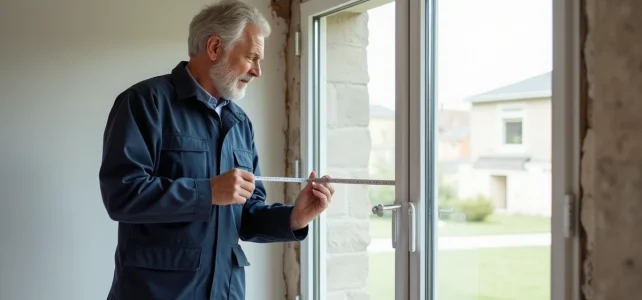
Replacing a window is not just about choosing a glazing type and an installer. Depending on whether the new joinery changes the exterior appearance of the building or not, regulations impose different formalities, ranging from no action required to a building permit. Understanding these distinctions before signing a quote helps avoid administrative blockages, or even a requirement to restore the original state.
Uw coefficient and thermal requirements: what your windows must comply with
Before any questions of declaration or funding, a technical criterion determines the project’s eligibility: the thermal transmission coefficient Uw. Expressed in W/m².K, it measures the amount of heat that passes through the window. The lower the value, the better the insulation.
To benefit from energy renovation aids, the installed windows must have a Uw of less than or equal to 1.3 W/m².K. This threshold corresponds to the minimum required by standardized sheets for Energy Savings Certificates and by MaPrimeRénov’.
The reform of the DPE that came into effect on July 1, 2024 (decree n° 2024-630 of June 26, 2024) has strengthened the weight of joinery in calculating the energy class. According to Ademe, replacing simple glazing with high-performance double glazing can now more frequently result in a full class upgrade for small areas. The quote must therefore explicitly mention the Uw coefficient of each joinery ordered.
Some municipalities add additional requirements. Since 2024, local architectural charters impose minimum performance standards or the presence of a thermal bridge breaker for windows visible from public space in heritage areas. A quote that omits these performances may lead to a refusal of planning permission, according to the 2024 Barometer of Local Urban Planning Regulations from the National Council of Architects.
Understanding the law and procedures for window replacement allows you to anticipate these requirements before signing the quote.

Preliminary declaration or building permit: what authorization for your windows
The type of formality depends on the nature of the change, not the number of windows involved.
Replacement in kind
If the new windows maintain the same dimensions, material, and color as the old ones, no preliminary declaration is required. The operation falls under the routine maintenance of the building.
Modification of the exterior appearance
As soon as the project changes the color, material, or style of the joinery, a preliminary declaration of work must be submitted to the town hall. The corresponding Cerfa form is accompanied by a facade plan and a photo of the existing state. The processing time is generally one month, extended to two months in protected areas.
Creation of an opening or change of use
Drilling a new opening in a load-bearing wall or converting a commercial space into housing with the addition of windows requires a building permit. This situation is rarer in a simple replacement project.
Windows in co-ownership and classified areas: additional constraints
In co-ownership, the facade is a common part. Even a seemingly trivial replacement requires the approval of the general assembly of co-owners if the exterior appearance is modified. The 2023-2024 activity report from ANIL indicates a significant increase in disputes related to the replacement of joinery without prior voting. The penalty can go as far as the obligation to restore at the co-owner’s expense.
In classified areas or near a historic monument, the Architect of the Buildings of France (ABF) must give his compliant opinion. This consultation extends the processing time and may impose specific materials (wood, precise RAL colors). Submitting the file without technical documents on the chosen glazing systematically delays the response.
- Co-ownership with modification of appearance: vote in the general assembly required before submitting the preliminary declaration
- ABF area (500 m perimeter around a historic monument): compliant opinion from the Architect of the Buildings of France required
- Protected sector or remarkable heritage site: reinforced constraints on materials, profiles, and colors
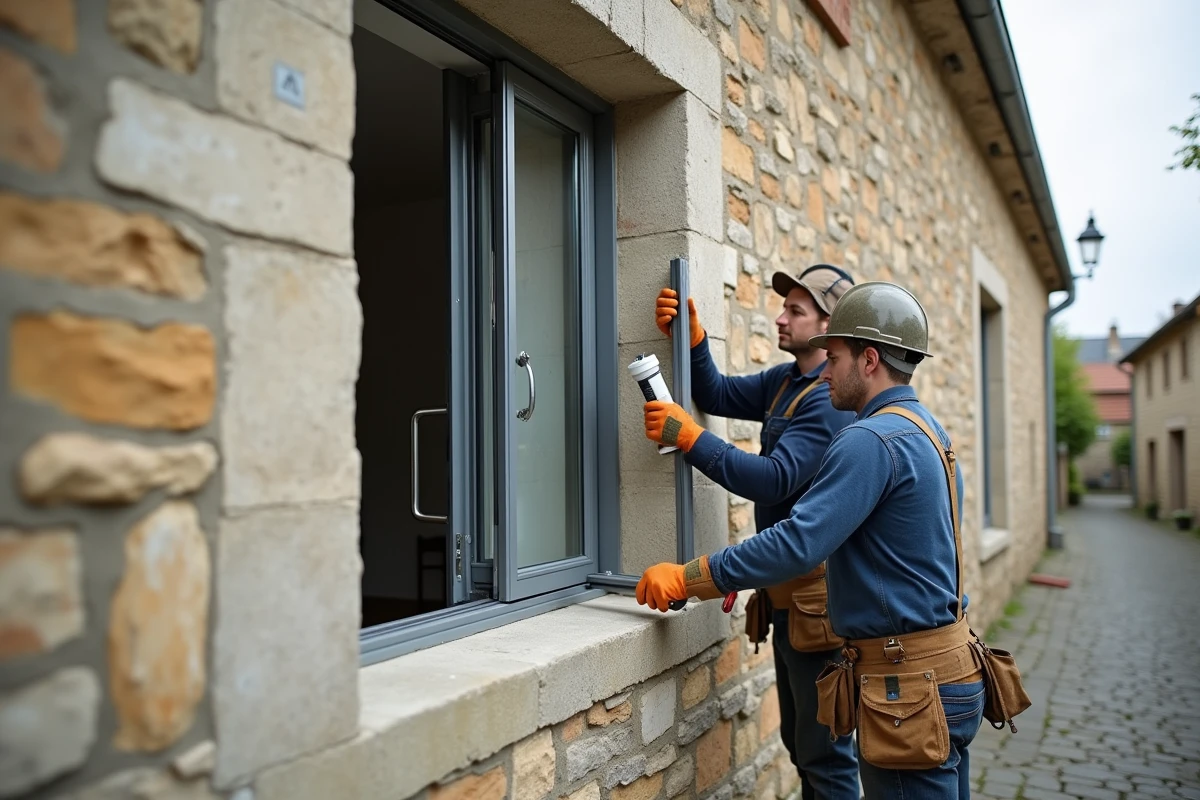
Financing window replacement: cumulative aids in 2024
Several schemes coexist and can be combined to reduce the out-of-pocket expense. Eligibility depends on the household’s income, the age of the housing, and the use of an RGE (Recognized Environmental Guarantee) artisan.
- MaPrimeRénov’ decarbonization: flat-rate aid per window, the amount of which varies according to the household’s income category, reserved for the replacement of single glazing
- Energy Savings Certificates (CEE) bonus: paid by energy suppliers, cumulative with MaPrimeRénov’ decarbonization
- Zero-interest eco-loan: up to 7,000 euros for a simple renovation gesture, no income conditions
- Reduced VAT at 5.5%: applied directly to the invoice for homes completed for more than two years
- Local aids: some local authorities offer supplements, consultable with France Rénov’ advisors
The quote must be signed after the MaPrimeRénov’ application, never before. Starting work without having submitted the online file makes the application inadmissible. For the CEE, the order form must also not be signed before the commitment to the partner energy supplier.
The order of procedures conditions the financing as much as the choice of glazing. A well-prepared project starts with checking the Uw coefficient on the quote, continues with submitting aid requests, then with the planning declaration if required, and ends with signing the order form.