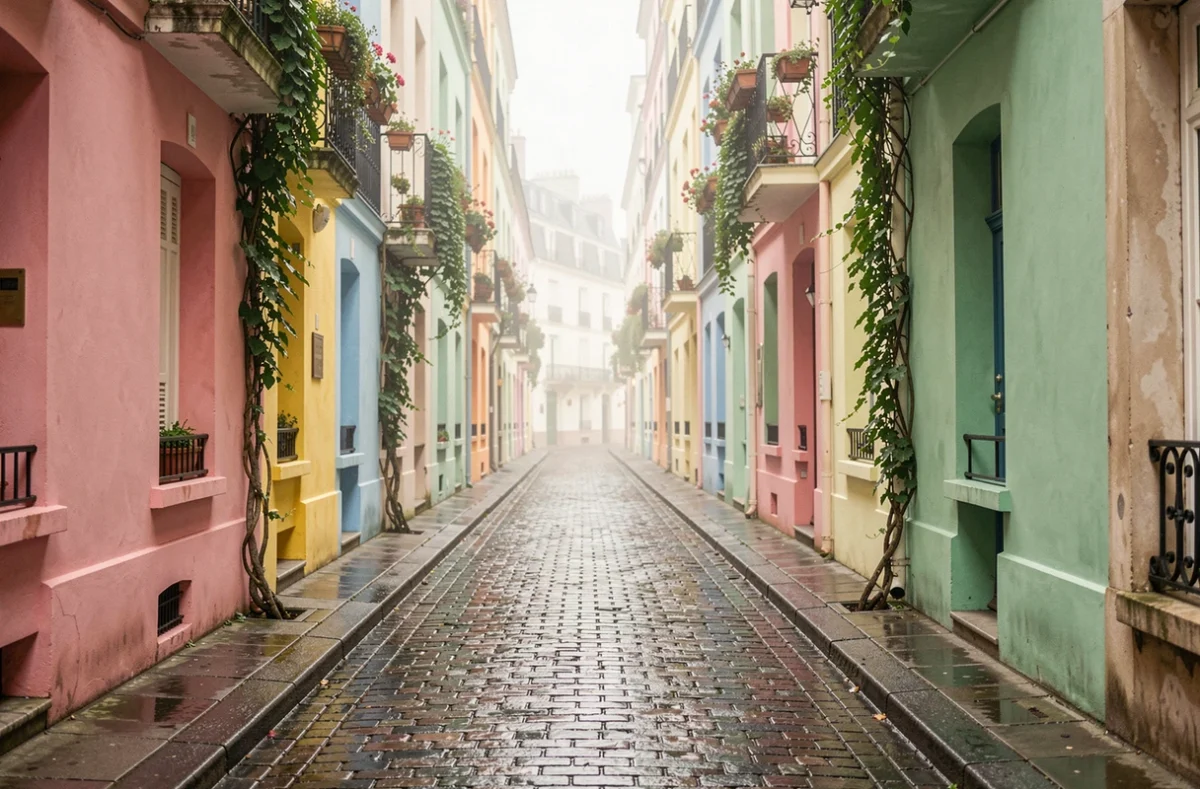
The Rue Crémieux spans just over a hundred meters in the 12th arrondissement of Paris, between the Gare de Lyon and the Place de la Bastille. Its pastel facades make it the most colorful street in Paris, but also one of the most photographed. Behind the pink, blue, and pistachio shades lies a history that begins under the Second Empire, on the ruins of a forgotten hippodrome.
From National Arenas to Workers’ Pavilions: The Birth of Rue Crémieux
Before it became a cobbled alley lined with low houses, the site of Rue Crémieux was home to the National Arenas, a vast open-air performance venue whose entrance faced the Place de la Bastille. This complex, later renamed Imperial Arenas, operated for several years before losing its audience.
It was the developer Moïse Polydore Millaud who paved the way in 1865, through the Compagnie Générale Immobilière. The buildings that lined it were anything but Haussmannian: workers’ pavilions of one or two stories, without the massive party walls of the grand boulevards. These individual houses, with their small front gardens, already stood out in the Parisian landscape of the time.
The street was initially named Rue Millaud, in reference to its developer. It was later renamed in honor of Adolphe Crémieux (1796-1880), a lawyer and politician known for the 1870 decree granting French nationality to Jews from Algeria. As detailed by the ileeo site on Rue Crémieux, this layer of political history remains largely ignored by visitors who peek between the colorful facades.
Pedestrianization and Pastel Colors: A Transformation Driven by Residents
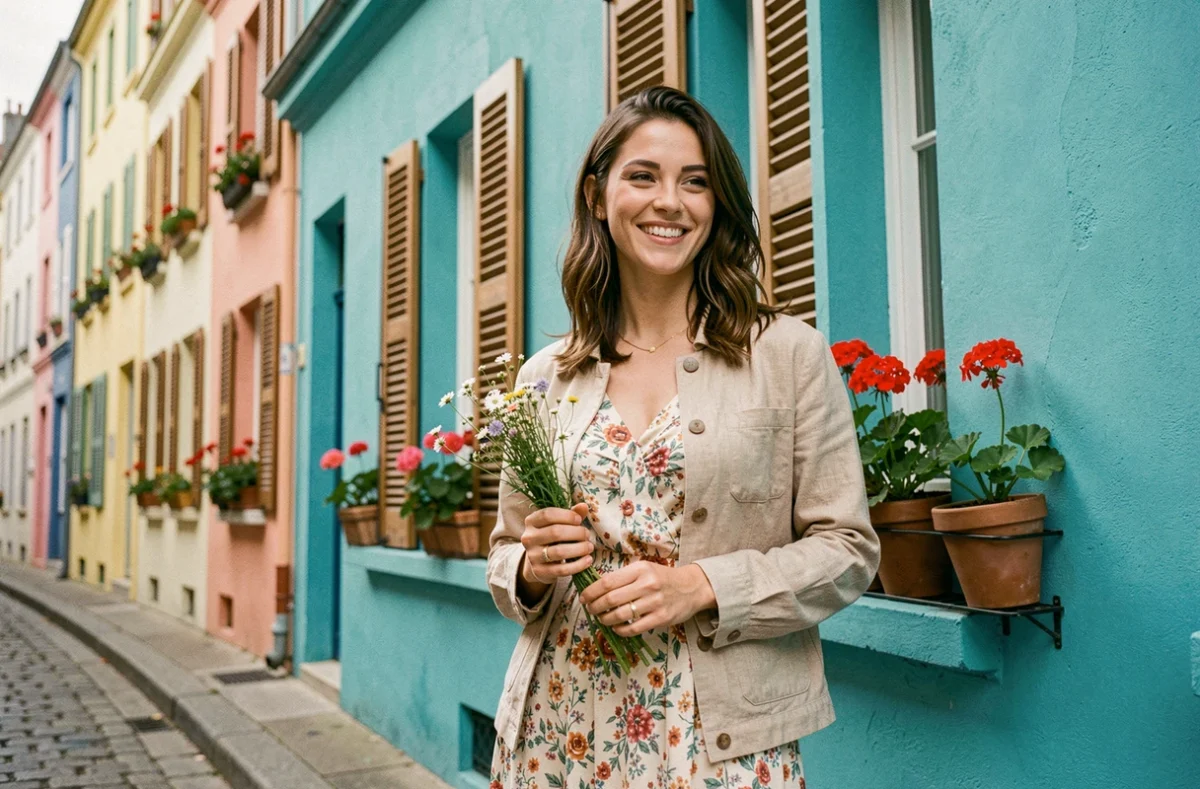
The facades have not always had these bright hues. The coloring dates back to 1993, initiated by the residents themselves. This aesthetic choice coincided with a request for pedestrianization put forth by the neighborhood’s inhabitants.
This link between urban development and private beautification deserves attention. The removal of car traffic transformed the street into a calm space, conducive to climbing plants and flower pots placed on the thresholds. Residents were able to invest in the space in front of their doors, which gradually gave the street its current character.
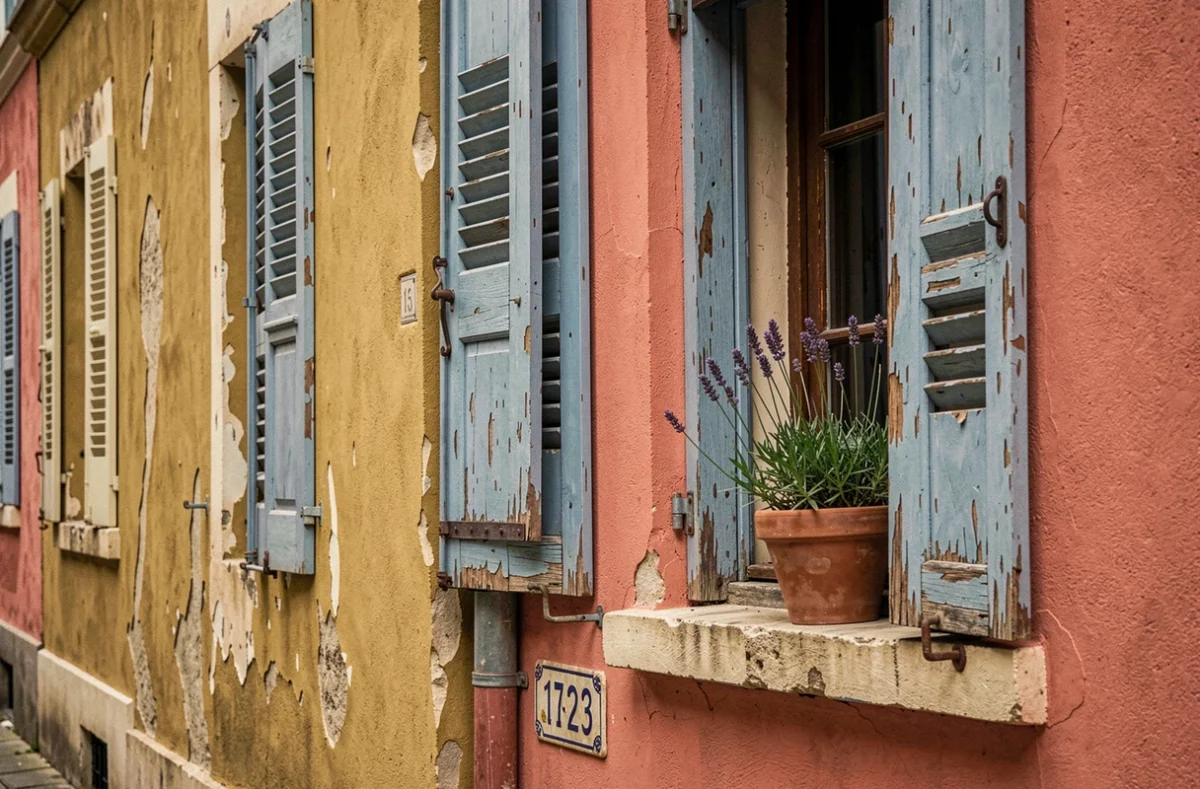
The low houses, inherited from the working-class nature of the neighborhood, facilitated this transformation. Their modest scale, wooden shutters, and facades accessible without scaffolding made painting almost artisanal. About thirty facades line the length of the street, each with its own palette.
Photographers, Influencers, and Residents: The Tension Defining Rue Crémieux Today
The street’s popularity on social media has created a problem that residents did not anticipate. Professional photo shoots, filming involving lighting equipment and technical teams, and groups of visitors lingering in front of doors have gradually altered the daily life of this residential street.
Residents have obtained stricter visiting practices. Current recommendations for photographers emphasize several points:
- Maintain a low noise level and limit the duration of their stay in the street
- Do not block entrance doors or use the thresholds of houses as posing decor
- Do not touch the plants or private decorative elements installed by residents
- Avoid peak times, especially sunny weekends
A personal photo taken by hand is not presented as prohibited. The restrictions mainly target commercial productions occupying the roadway. However, feedback on the ground varies regarding the actual tolerance of residents towards the continuous flow of visitors, even discreet ones.
Regulating Flows Rather Than Closure
Rue Crémieux has not been closed to the public. The adopted logic is more about regulation than prohibition. The space remains public, but the uses are framed by codes of good conduct relayed in guides and on tourist platforms.
This approach distinguishes Rue Crémieux from other Parisian sites facing similar issues. The question remains open: to what extent can a residential street absorb tourist traffic without its inhabitants eventually retreating behind gates?
Rue Crémieux and the Heritage of the 12th Arrondissement: What Photos Don’t Show
The Quinze-Vingt neighborhood, where the street is located, has an architectural history that goes beyond the pastel facades. The former presence of the National Arenas, the proximity of the Gare de Lyon, and the network of small streets around the Place de la Bastille compose an area where several layers of popular Paris coexist.
The plaque at number 8 of the street serves as a discreet marker that most visitors overlook, too busy framing the colorful alignment. The traces of the historic flood that affected the neighborhood add an additional layer to a place that photography often reduces to a palette of colors.
- The pavilions testify to a model of Parisian working-class housing predating Haussmannian standardization
- The paving of the street, preserved after pedestrianization, contributes to the visual atmosphere as much as the facades
- The abundant vegetation on the thresholds is maintained by residents, not by the City of Paris
Rue Crémieux is a lived space before being a backdrop. The best-kept secrets of this street do not lie in a hidden historical anecdote, but in the persistent gap between the image that visitors come to seek and the reality of a daily living place. Each repainted facade, each moved flower pot, each shutter closed on a Sunday afternoon tells this difficult coexistence between living heritage and visual consumption.