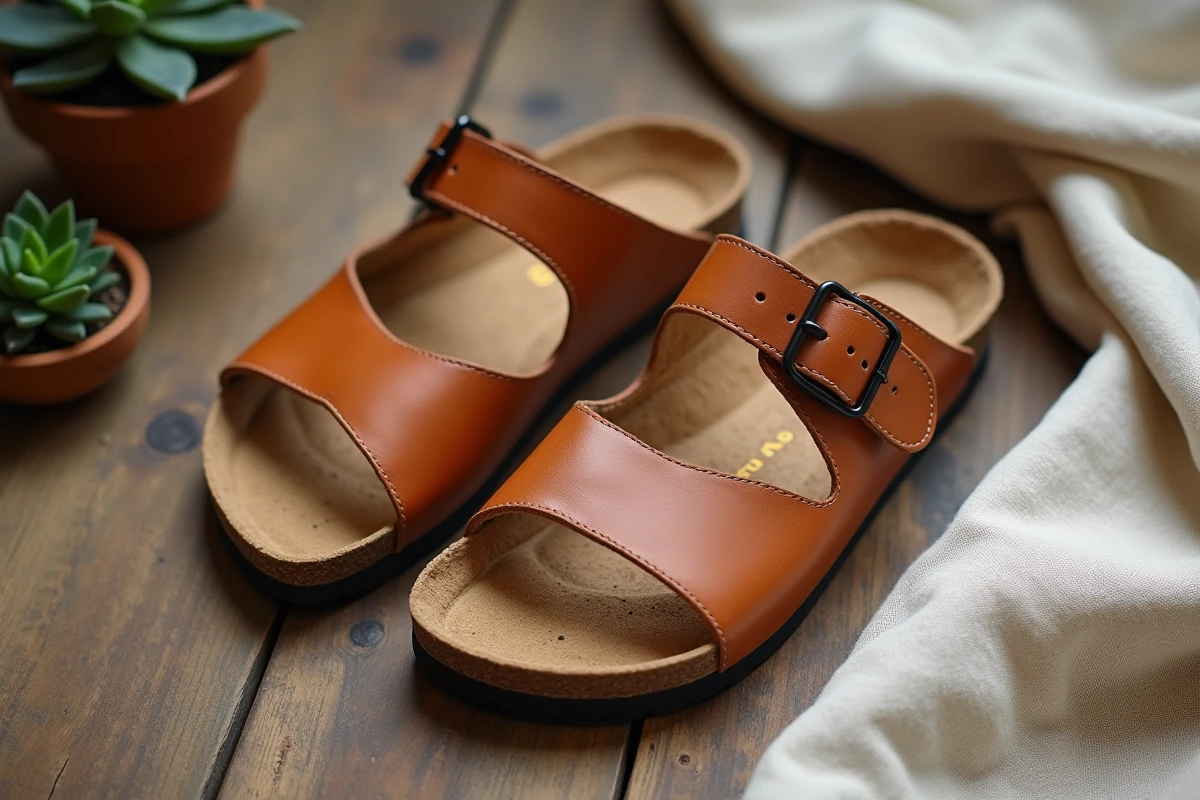
Birkenstock sandals hold a special place in the landscape of summer footwear. Their cork sole and anatomical shape have become a reference for millions of wearers. However, the market for comfortable sandals has significantly expanded in recent years, with brands offering different technical approaches, new materials, and varied price positions. Mapping these options allows for an understanding of what truly distinguishes a good sandal from a mere aesthetic copy.
Anatomical sole and arch support: what podiatrists look at first
The popularity of Birkenstock largely rests on their molded cork-latex sole, which conforms to the arch of the foot. This principle of arch support is not an exclusive patent. Since 2023-2024, several comfort brands like Ecco, Mephisto, or Finn Comfort have been highlighting sandals with marked arch support and posture correction, relying on podiatrist recommendations in their arguments.
What sets these models apart from a simple dupe bought online is the design of the insole. A flat-soled sandal with two crossed straps may visually resemble an Arizona, but it does not replicate the characteristic arch support or heel cup. Looking for an alternative to Birkenstock requires looking beyond the design to focus on the podiatric structure of the product.
Field feedback varies on this point: some wearers find the arch support of Birkenstock too pronounced, especially at the beginning of use. Brands like Scholl offer a more gradual approach, with soles that combine foam and gel rather than rigid cork. Comfort remains a subjective notion, linked to foot morphology.

Bio-sourced materials and recycled soles: the area where Birkenstock is being caught up
The cork of Birkenstock gives them a natural image, but alternatives in bio-sourced materials are progressing rapidly. Since 2024, players like Deichmann and more specialized brands are introducing sandals with algae-based soles, bio-sourced EVA, or recycled rubber. These collections are positioned as more responsible than traditional cork associated with classic EVA foam.
Some spring-summer 2024 and 2025 collections communicate about a significant share of recycled or bio-sourced materials, with quantified commitments in their CSR reports. This ecological dimension far exceeds the simple “vegan” argument found in brands like Minuit sur Terre, which focus on the absence of animal leather.
The issue of chemical substances adds a layer of complexity. The ongoing extension of European restrictions on PFAS and certain plasticizers (REACH regulation) could alter the composition of many sandals sold in Europe. Brands that anticipate these standards offer a guarantee of regulatory sustainability that low-cost dupes do not provide.
Alternative sandals between 30 and 90 euros: what the price changes concretely
The price of a pair of Birkenstock Arizona is at the high end of the common sandal market. Dupes sold around 25-30 euros on platforms like ASOS replicate the appearance, but the compromises are on specific elements.
- The outsole is often made of standard EVA, which is less durable and less shock-absorbing than the cork-latex blend. Wear appears significantly faster on the pressure points of the heel and forefoot.
- The straps made of low-quality synthetic material lose their flexibility after a few weeks. On Birkenstock models or their direct competitors (Plakton, Scholl), leather or technical synthetic material retains its shape longer.
- The absence of structured arch support turns the sandal into a simple flat thong with straps, negating the comfort argument.
In the mid-range, brands like Jonak or Plakton offer models with a true ergonomic sole, a refined design, and decent materials. The value for money is found in this range, where you get a sandal that lasts several seasons without reaching the Birkenstock price.
Mules and closed clogs: the Boston trend and its variations
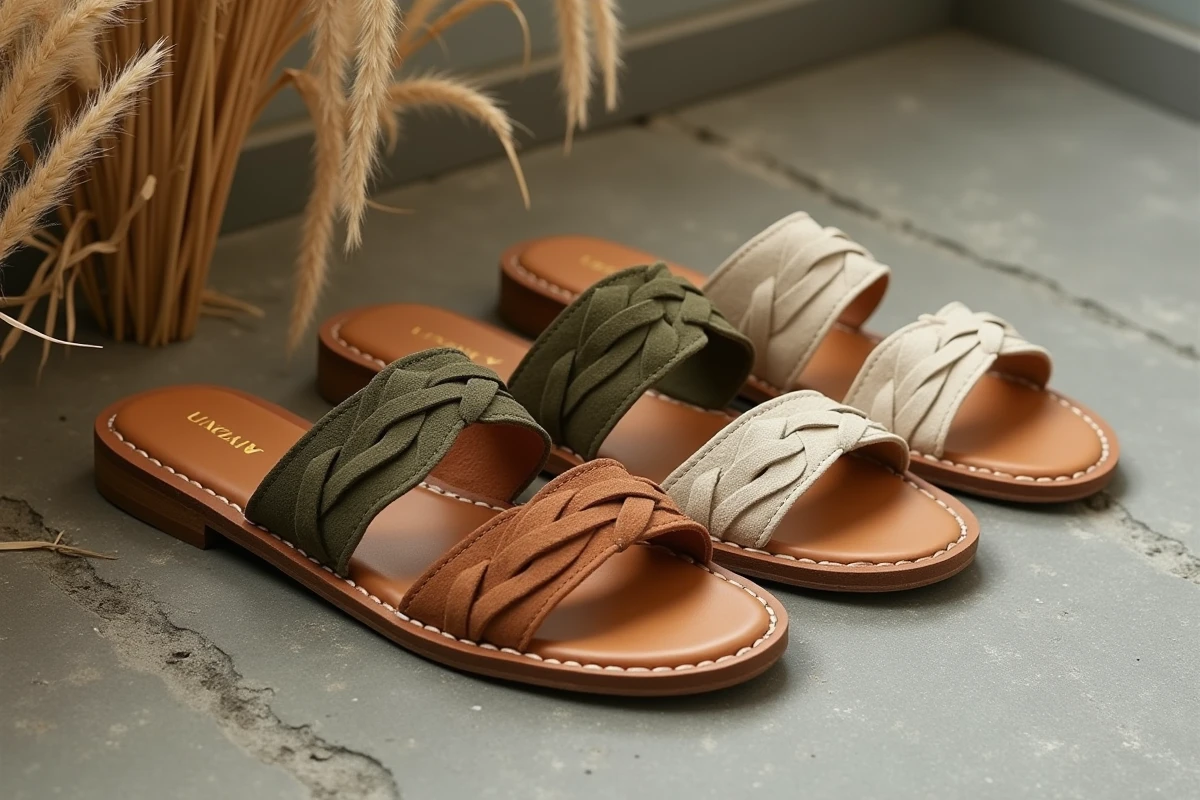
The Boston model from Birkenstock (closed suede clog) has seen a spectacular resurgence in the urban wardrobe. This success has generated a wave of alternative clogs, from Crocs to Plakton mules, including models designed by fast fashion brands.
The fundamental difference between a Boston-type clog and its alternatives lies in the rigidity of the sole and the depth of the fit. The Boston offers a pronounced heel cup that keeps the foot in place. Many copies eliminate this cup to simplify manufacturing, forcing the foot to “grip” to stay in the shoe, which can lead to muscle tension.
Molded EVA clogs like Crocs meet a different need: lightweight, easy to maintain, water-resistant. Comparing them directly to the Boston is like opposing two philosophies. One focuses on anatomical support and leather, while the other emphasizes practicality and lightweight design. The choice depends more on use than style.
Criteria for choosing a durable alternative sandal
Summarizing the elements that separate a good alternative from a superficial copy boils down to a few technical points often overlooked in fashion comparisons.
- Check for the presence of a real arch support by running your finger under the insole: a firm bump at the arch indicates anatomical molding, a flat surface indicates a generic sole.
- Prefer outsoles made of rubber or high-density EVA rather than lightweight foam, which compresses in a few months.
- Observe the stitching and bonding at the straps: visible and irregular bonding is a reliable indicator of limited durability.
- Consider REACH regulations for sandals imported from outside the EU, where chemical substance controls are less systematic.
The market for comfortable sandals is no longer limited to a binary choice between Birkenstock and cheap copies. Brands that invest in podiatric design, responsible materials, and regulatory compliance are carving out a distinct category, where design is just one criterion among others. Testing a pair in-store remains the most reliable method to evaluate what no product sheet can convey: the feeling underfoot after ten minutes of walking.