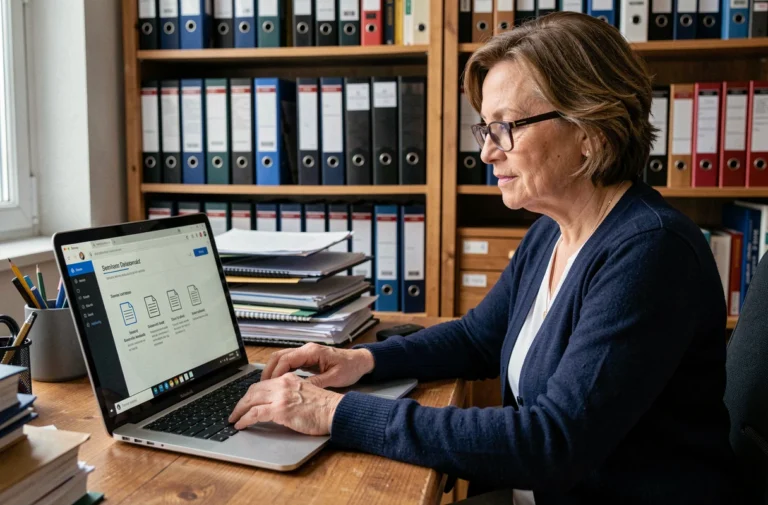
A nursing practice brings together several state-certified nurses who work independently and travel to patients’ homes. This collective organization distinguishes the practice from a nurse working alone: the pooling of schedules, equipment, and skills ensures continuity of care over extended hours, including weekends and holidays.
Digital Coordination Between Nursing Practice and Primary Care Physician
Since the accelerated deployment of the “My Health Space” system and e-prescription (decree of April 28, 2022), nursing practices have a technical lever that public content rarely mentions. The shared digital medical record centralizes prescriptions, reports, and assessments accessible to the primary care physician, pharmacist, and, if necessary, the hospital team.
For a patient on anticoagulants, for example, the nurse enters monitoring results into the shared record. The primary care physician can adjust the dosage without waiting for a physical appointment, and the pharmacist checks for consistency at the time of dispensing. This digital loop reduces the time for therapeutic adjustments and limits errors related to oral or paper transmission.
A structured practice benefits from this coordination because it manages a sufficient volume of patients to justify the investment in software compatible with “My Health Space.” An isolated nurse can also use these tools, but the administrative burden weighs more heavily on a solo practitioner. You will also find information on Construire la Bretagne detailing the concrete functioning of these coordinated care approaches.
Complex Home Care: What the Nursing Care Assessment Covers
The reform of the pricing for home nursing care, driven by the contractual amendments n°8, n°9, and n°10 to the national nursing convention (2022-2024), introduced a central concept: the nursing care assessment (NCA). This document is gradually replacing the old nursing care approach (NCA) for dependent patients.
The NCA is not just a simple administrative form. It consists of a comprehensive evaluation of the patient (autonomy, fall risks, skin condition, cognitive abilities) that determines the level of care and, consequently, the applicable pricing. The nursing practice conducts this assessment, sends it to the primary care physician for validation, and then adjusts the care plan based on the patient’s health status changes.
Technical Procedures and Therapeutic Education
Beyond routine procedures (injections, dressings, infusions, blood tests), recent contractual amendments place greater emphasis on prevention and therapeutic education. A nursing practice can thus support a diabetic patient in learning self-monitoring of blood glucose or train a patient on oral anticoagulant therapy to recognize warning signs.
- The NCA assesses the patient’s autonomy and daily care needs, which determines the frequency of home visits.
- Therapeutic education aims to make the patient an active participant in their care, reducing the number of avoidable hospitalizations.
- Prevention of pressure ulcers and falls is an integral part of the care plan for bedridden or mobility-impaired patients.
- Palliative care at home can be coordinated by the practice in conjunction with a mobile hospital team.
This diversity of procedures makes the nursing practice relevant far beyond occasional post-operative care. For patients with chronic conditions, the regularity of visits creates a follow-up that episodic emergency visits cannot replace.
Home Hospitalization and the Role of the Independent Nursing Practice
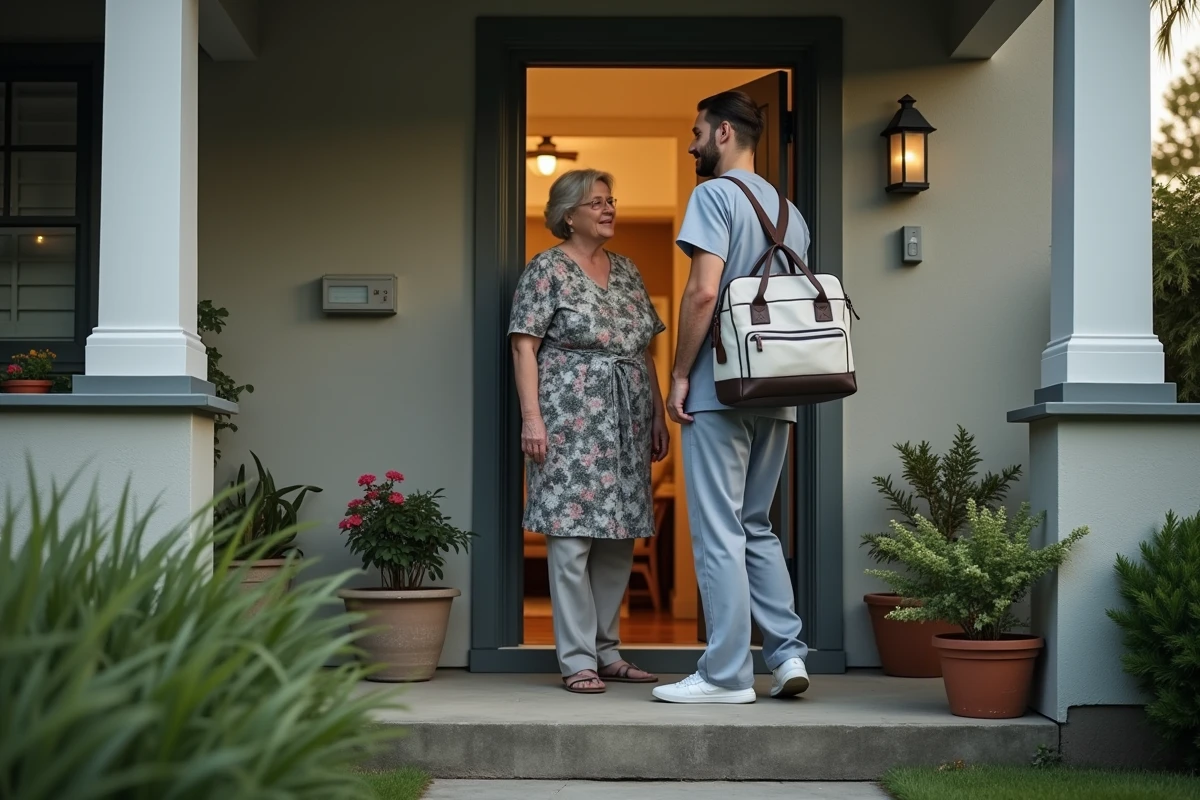
Regional health agencies (ARS) and Health Insurance encourage the substitution of full hospitalizations with home care. Home hospitalization (HAD) is the most structured system, but independent nurses also intervene in early discharges from traditional hospitalization, directly following the hospital service.
The distinction matters. In HAD, the patient remains legally hospitalized: a HAD facility coordinates care, and the nursing practice acts as a service provider. Outside of HAD, the primary care physician prescribes standard home nursing care, covered at 60% by Health Insurance (100% in the case of long-term illness).
Why Choose a Practice Over a Solo Nurse for These Care Approaches
Hospital discharge often requires bi-daily visits, sometimes at fixed times (insulin, intravenous antibiotics). A practice composed of several nurses can absorb these scheduling constraints through the rotation of schedules. If a practitioner falls ill or takes leave, a colleague from the practice ensures continuity of care without interruption.
This integrated replacement mechanism is a rarely articulated but crucial argument for fragile patients. An interruption in care, even for 48 hours, can lead to re-hospitalization for a patient on infusion or with a complex wound.

Financial Coverage of Home Nursing Care
Nursing care prescribed by a physician and performed by a contracted nurse is reimbursed by Health Insurance. The remaining portion, covered by the mutual insurance or borne by the patient, depends on the contract subscribed and the reason for care.
- Patients with long-term illnesses (ALD) benefit from 100% coverage for care related to their condition.
- Procedures performed as part of an NCA follow a flat-rate pricing that varies according to the assessed level of dependency.
- The nurse’s travel expenses are included in the conventional pricing, with no additional charge for the patient.
The nursing practice directly manages the teletransmission of care sheets to Health Insurance, relieving the patient of any administrative burden. For isolated elderly individuals or patients with reduced autonomy, this administrative management represents a concrete easing of daily life.
The structuring into a practice also facilitates adherence to third-party payment: the patient does not advance costs for the Health Insurance portion, and often not for the complementary portion if the practice offers full third-party payment.
Choosing a nursing practice rather than a solo practitioner does not change the cost of care for the patient. The difference lies in continuity, digital coordination with the rest of the care team, and the ability to manage heavy care without interruption. For a chronic patient or one recently discharged from hospitalization, these three parameters weigh more than the comfort often highlighted in general guides.