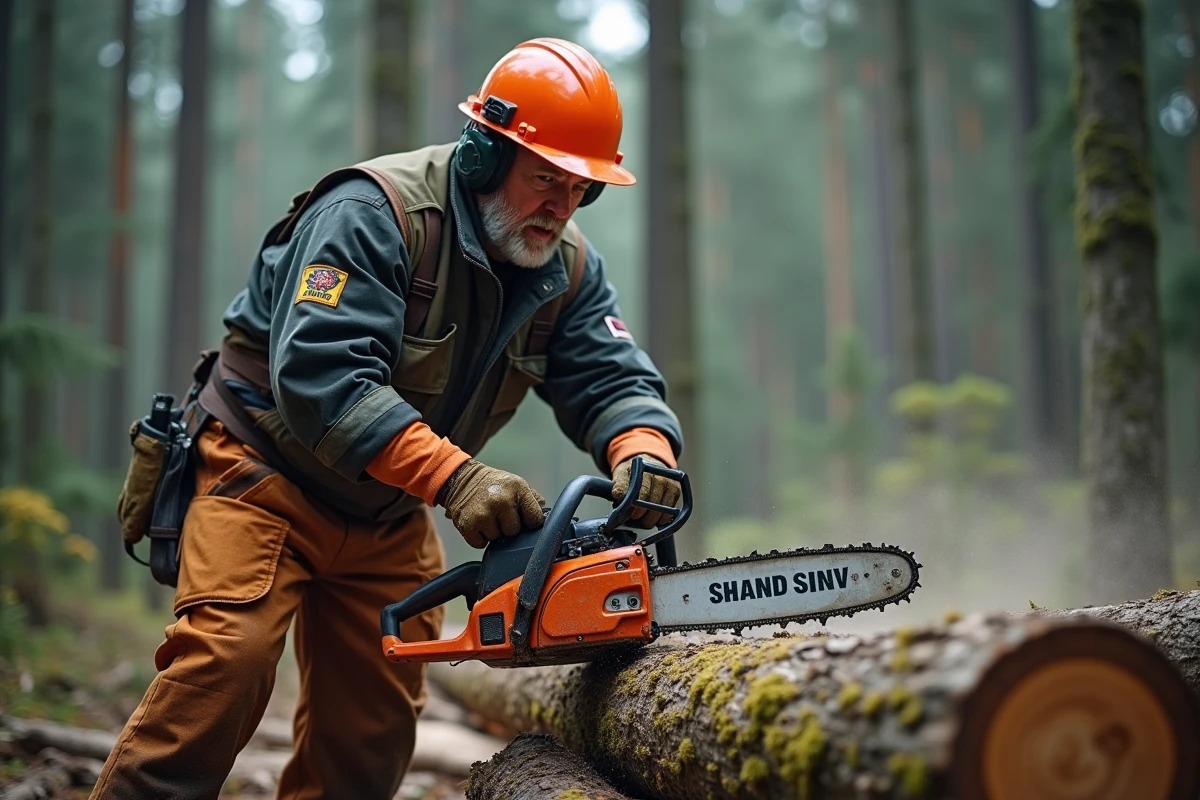
The Husqvarna 445 is a mid-range chainsaw designed for homeowners and semi-professional users who cut firewood or maintain wooded areas. Its X-Torq engine, developed by Husqvarna to reduce fuel consumption and emissions, forms the technical foundation of this machine.
With a fuel tank and chain oil reservoir sized for extended work sessions, the 445 has held a stable position in the Swedish brand’s catalog for several years.
Plastic housing and durability: the weak point that product sheets do not show
The Husqvarna 445 uses a molded plastic housing, unlike professional chainsaws that incorporate magnesium or alloy components. This construction choice lightens the machine and reduces manufacturing costs, but it has direct consequences on longevity.
User feedback and independent repairers converge on this point: the plastic housing limits the machine’s repairability. When a housing cracks or deforms due to repeated vibrations, the repair often costs as much as the replacement.
To find the features and reviews of the Husqvarna 445, it is important to keep this in mind: this chainsaw is designed for moderate use over several seasons, not for intensive daily use. Users looking for a long-term repairable machine often turn to metal-housed models, such as Husqvarna’s XP range or some direct competitors.
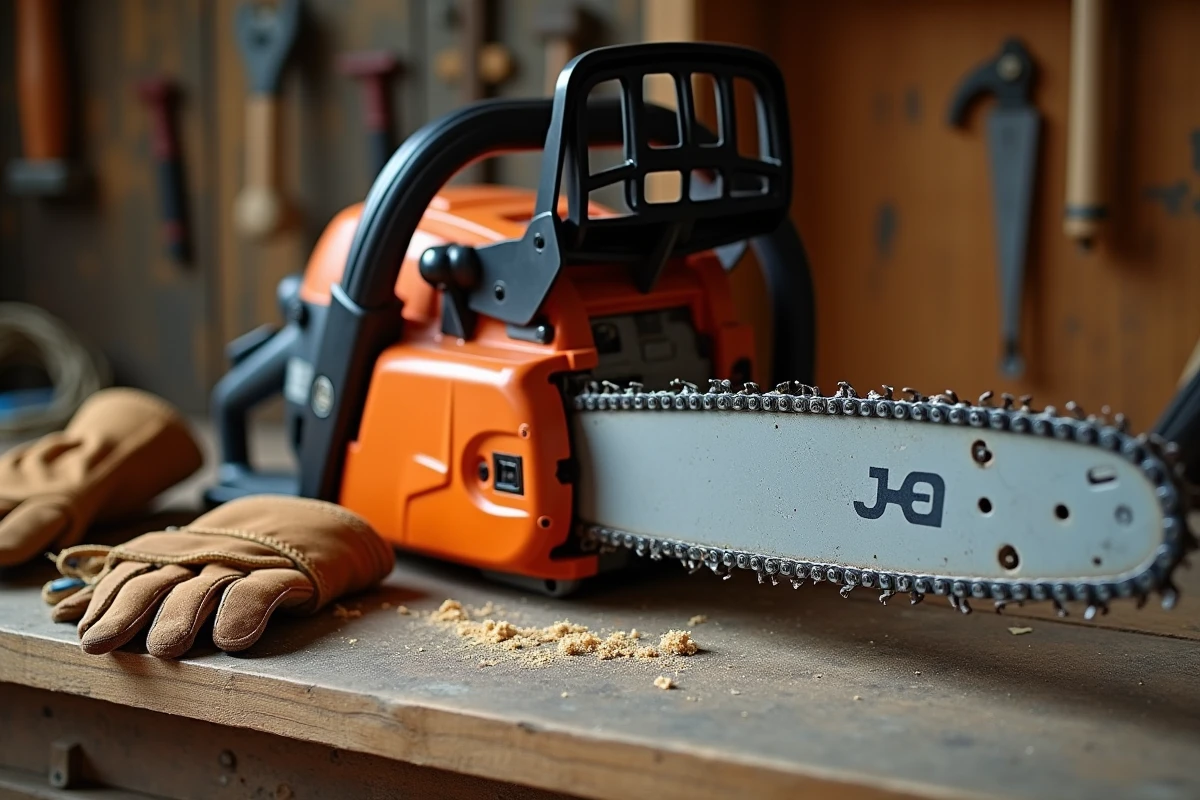
X-Torq engine of the Husqvarna 445: what this technology changes in daily use
The X-Torq engine is Husqvarna’s proprietary technology for its gas chainsaws. The principle relies on a stratified scavenging of the air-fuel mixture in the cylinder, which separates fresh gases from burned gases more efficiently than a conventional two-stroke engine.
In practice, this translates into two measurable effects in daily use:
- Reduced fuel consumption compared to conventional two-stroke engines of the same displacement, extending the runtime per tank
- Lower exhaust emissions, making use less unpleasant during prolonged cuts in semi-enclosed areas (shelters, dense edges)
- A stable engine speed under load, provided the carburetor is correctly adjusted
This last point deserves particular attention. Several field reports indicate that the 445 can exhibit stuttering operation issues if the carburetor adjustment is not precise. A repairman documented the case of a 445 that “was stuttering,” requiring fine adjustment of the mixture screws and checking for unwanted air intake. This type of symptom mainly appears after a few seasons of use or prolonged storage without draining the fuel.
Carburetor adjustment on the 445: an underestimated operation
The carburetor of the Husqvarna 445 has adjustment screws (low speed, high speed, idle) that allow for adjusting the air-fuel mixture. On recent models, some screws are factory-restricted to comply with emission standards, complicating adjustments for non-experts.
A poorly adjusted carburetor degrades both power and reliability. Typical symptoms include an engine stalling at idle, hesitant acceleration, or stuttering under load. Another user report on a 445 X-Torq mentions a phenomenon of “surges” (unintentional speed variations) persisting even after replacing the carburetor and coil, pointing to unwanted air intake at the gaskets or manifold.
For an individual, the most reliable solution is to entrust this adjustment to an authorized Husqvarna dealer with a tachometer. Attempting to adjust by ear without experience risks leaning out the mixture and damaging the piston due to overheating.
Routine carburetor maintenance
Draining the fuel tank before storage of more than a few weeks prevents clogging of the jets. Using alkylate fuel (pre-mixed, ethanol-free) also reduces deposits in the fuel system. These are simple actions that prevent most carburetion failures on this type of gas chainsaw.
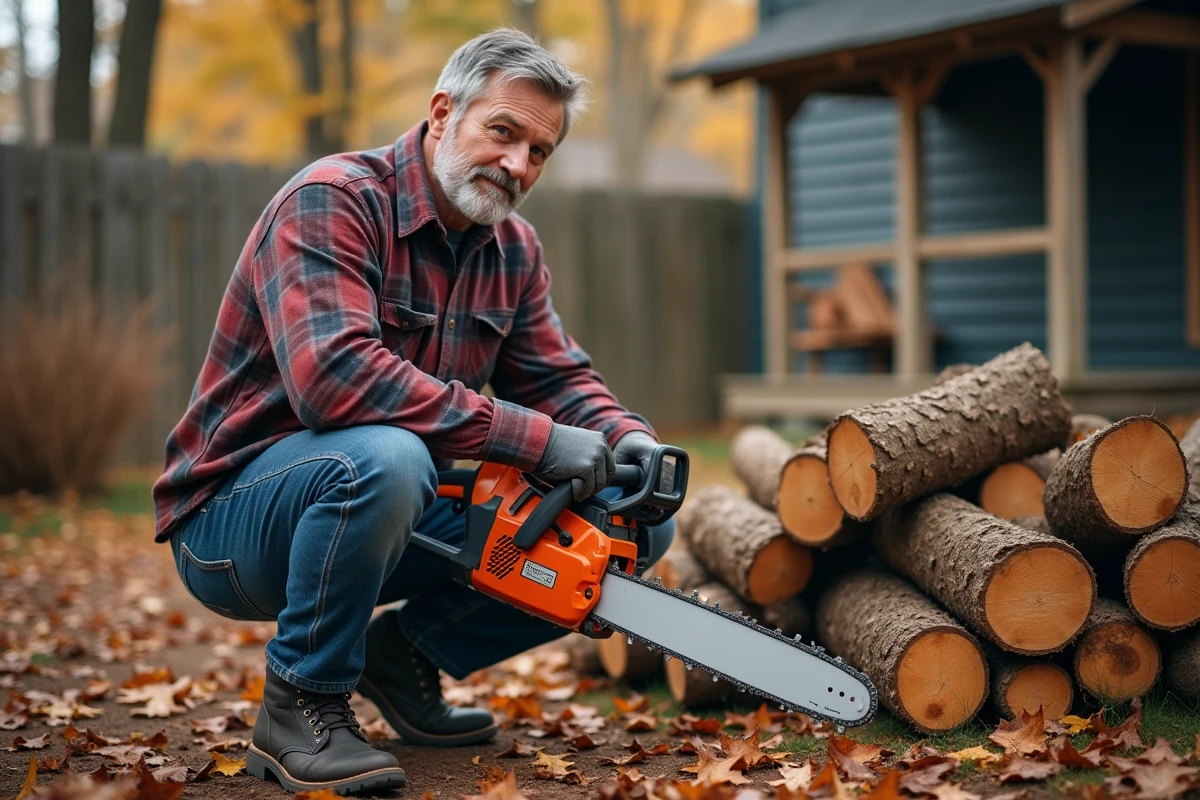
Husqvarna 445 at the end of its series: is it still worth buying in 2025?
Husqvarna has launched the 445S as a direct replacement for the 445 Mark II. This transition is reflected in a decrease in the presence of the 445 in the catalogs of several dealers, with the model now often relegated to end-of-series or refurbished machines.
This situation creates a window of opportunity for savvy buyers. More aggressive promotional operations are appearing on the 445 (discounted prices, bundles of guide and chain included) to clear remaining stock. The value for money can therefore be interesting, provided two elements are checked:
- The availability of spare parts (air filter, spark plugs, rings) at the local dealer, as after-sales support will depend on the network’s willingness to maintain stock for a model at the end of its life
- The condition of the guide and chain provided in the bundle, which are sometimes entry-level accessories with a standard link pitch and not the optimal combination for the machine
- The manufacturer’s warranty, which normally remains the same on a new product at the end of its series but may vary on refurbished items
Buying a new 445 on promotion remains sensible for domestic firewood use, with a few steres per season. For more intensive use or for those who want a machine supported over time, the 445S represents a more sustainable choice in terms of technical support and availability of parts.
Safety and protective equipment for gas chainsaws
Regardless of the chainsaw used, wearing protective equipment remains a non-negotiable condition. Cut-resistant pants, a helmet with visor and hearing protection, reinforced gloves, and safety boots constitute the minimum. The Husqvarna 445, like any gas chainsaw of this power, also requires a functional chain brake, which should be checked systematically before each cutting session.
Starting the machine involves placing it on the ground, foot in the rear stirrup, and pulling the starter with a firm motion. Attempting to start a chainsaw while holding it in the air is a common mistake that exposes one to a loss of control.
The Husqvarna 445 has served as a mid-range reference for several years for a good reason: its X-Torq engine offers a decent compromise between power, consumption, and ease of use. Its main limitation, the plastic housing, clearly designates it for occasional to moderate use. With the arrival of the 445S and end-of-series promotions, the timing of purchase is as important as the choice of model.