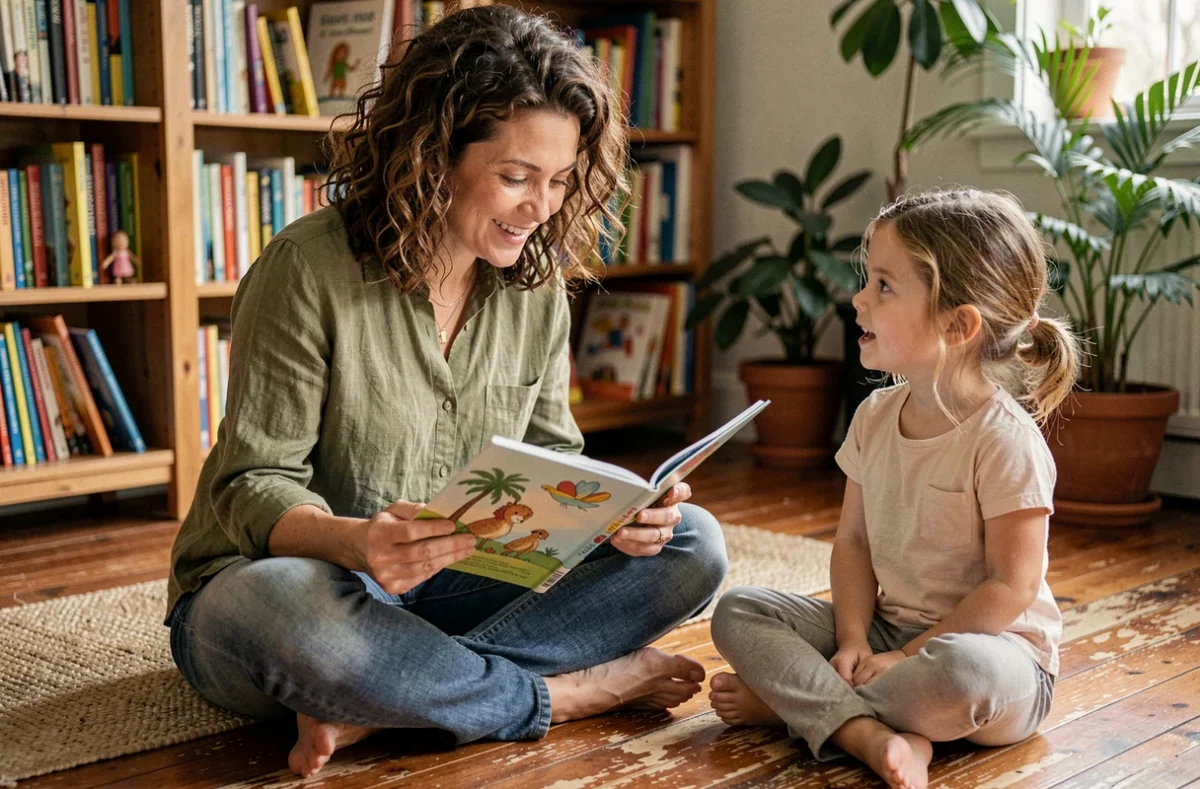
Socially conscious children’s literature is about more than picture books with feel-good messages about tolerance. Behind the label is an editorial segment that builds its catalogues around perspectives missing from the traditional canon: single-parent and same-sex-parent families, disability, systemic racism, and power dynamics between adults and children. Publishers such as Talents Hauts, La ville brûle and On ne compte pas pour du beurre publish titles that put these subjects at the heart of the story, rather than using them as decorative background.
Socially conscious children’s book catalogues: what sets an editorial vision apart from a marketing pitch
A picture book featuring a family with two mothers is not enough to qualify an editorial vision as socially conscious. The distinction lies in the consistency of the catalogue and the coherence between the publisher’s narrative and visual choices and its overall positioning.
Cambourakis, for example, publishes titles that explore how gender identity develops from early childhood, by authors whose work is grounded in research. A consistent catalogue creates an editorial vision—not a single title. A general-interest publisher that releases a book about diversity to tick a seasonal box does not have the same impact as a publisher whose every release questions the social norms passed on to children.
For families looking for socially conscious children’s books that reflect their values, the distinction between a cohesive catalogue and an opportunistic title remains the most reliable first criterion for choosing what to read.
In his book L’Aventure politique de la littérature jeunesse (La Fabrique, 2022), author and publisher Christian Bruel points out that his is the first book in forty-two years to address politics and children’s literature. This four-decade-long editorial silence reveals just how thoroughly the subject has been kept out of view, including in literary criticism.
Representation in children’s books: why families care
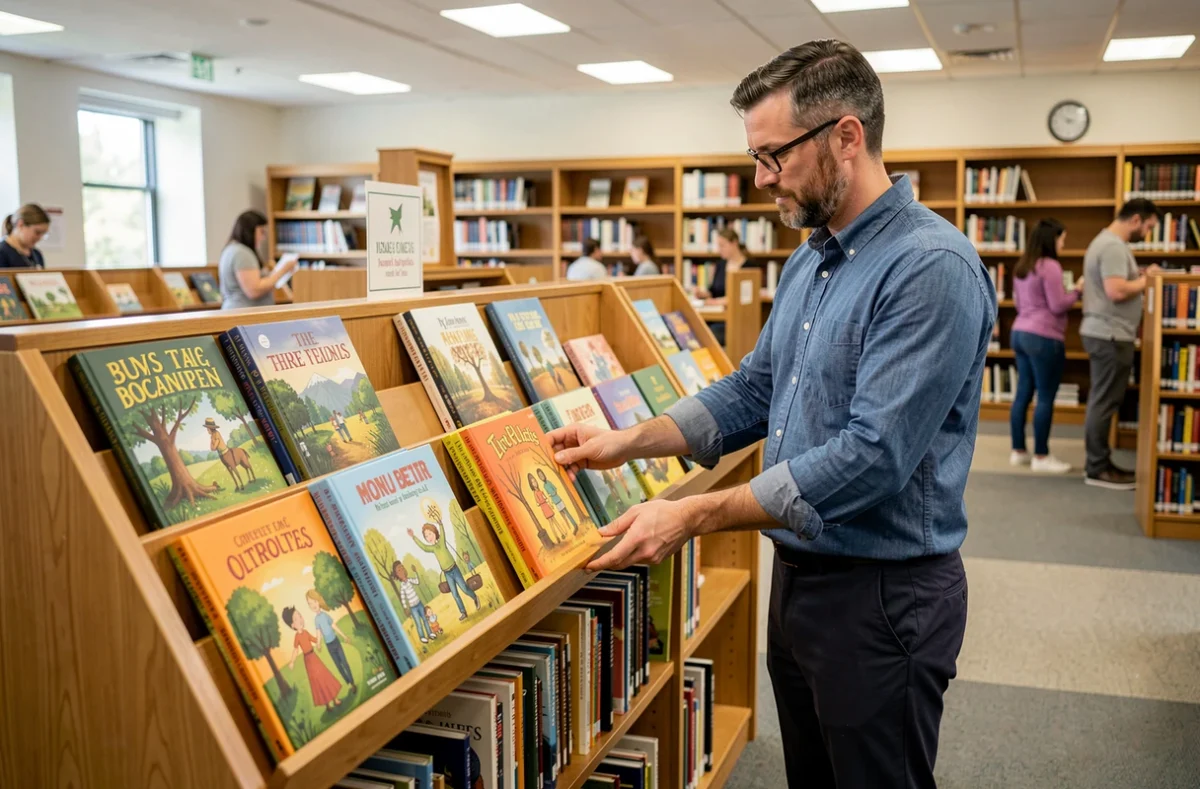
Representation helps children imagine themselves in a world with fewer rigid norms. A child raised by one parent, an adopted child, or a child whose parents have different skin colours will not automatically find their own reality reflected in traditional picture books. The issue goes beyond simply being visible: children need stories in which they are not the exception.
We see that parents today care as much about storytelling quality as they do about authentic representation. A picture book that portrays family diversity through caricature has the opposite effect to the one intended. Informed families can tell the difference between a story that normalises diversity and one that exoticises it.
Research by Cécile Kovacshazy, senior lecturer in comparative literature at the University of Limoges, shows that children’s books convey ideas about authority, emotions and relationships between adults and children that also influence parents who read them. Picture books shape parents’ perspectives as much as children’s.
Practical criteria for assessing a socially conscious picture book
- The main character takes action in the story instead of being subjected to a moral lesson aimed at the reader. Social engagement comes through the storytelling, not didacticism.
- The illustrations avoid visual stereotypes (uniform skin tones, exclusively nuclear families, and rigidly gendered roles in the background).
- The publisher regularly releases titles on comparable subjects, demonstrating a sustained editorial commitment rather than a one-off bid for publicity.
- The text stands up to being read aloud together: it opens up a conversation between adult and child instead of shutting it down with an explicit moral.
Children’s books and social media: BookTok’s role in helping readers discover new titles
Recommendation channels have changed. For a long time, recommendations came from librarians, teachers and specialist booksellers. Social media has become a powerful way to discover children’s books, particularly for teenagers and young parents.
The survey by the Centre national du livre and Ipsos, Les jeunes Français et la lecture (2024 results), examines the role of screens and the factors that encourage young people to read. The Les Français et la lecture barometer, presented by ICI, confirms that social media can spark an interest in reading, particularly among teenagers.
BookTok, TikTok’s literary community, is not limited to English-language young adult novels. French-speaking creators recommend picture books and children’s novels about racism, grief, ecology and transgender identity. A viral video can leave a small publisher out of stock within days.
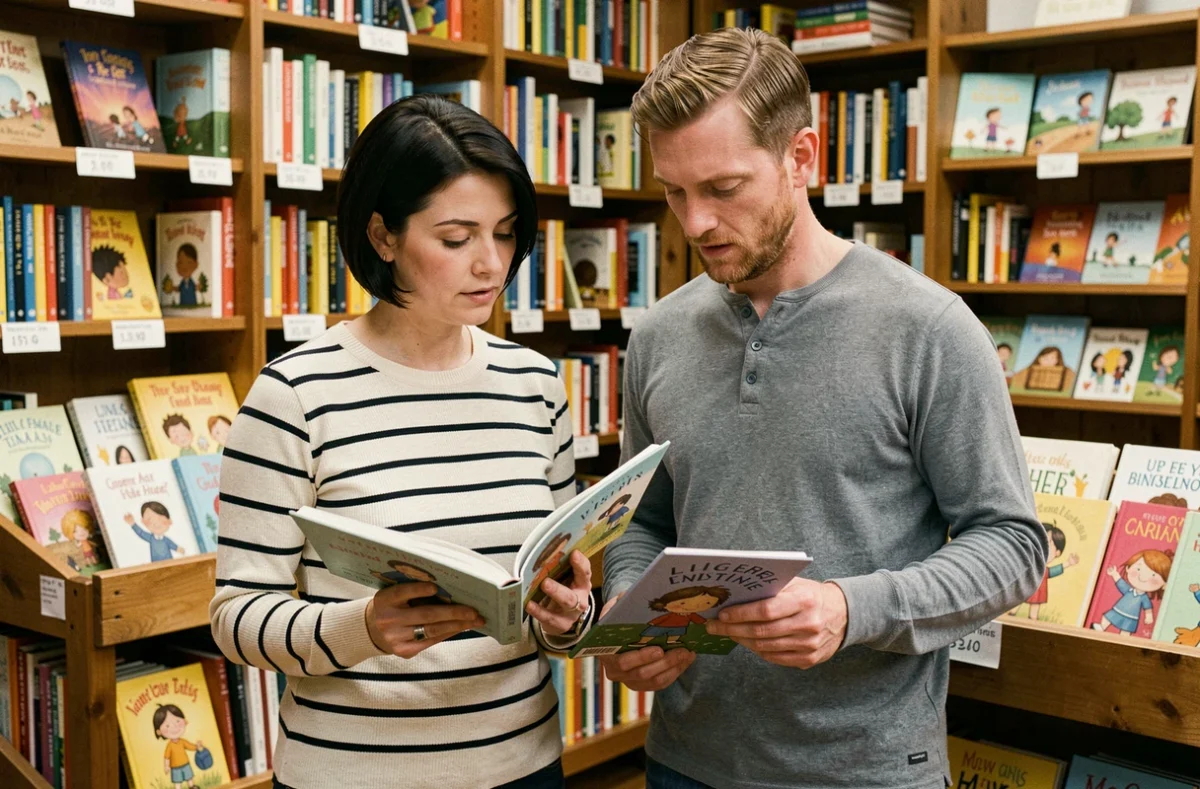
This shift is changing the balance of power between publishers. An independent publisher with a social mission can reach a wide audience without an advertising budget if a title finds its audience online. Recommendations no longer come only from book professionals, but also from parents and teenagers filming their bookshelves.
Screen time and shared reading: what families look for in a socially conscious book
The CNL’s 2025 barometer highlights a marked gap between the time young people spend on screens and the time they devote to reading. In this context, we can see that families who choose a socially conscious book are looking for more than just content: they want a shared moment of conversation.
A picture book about difference, injustice or death creates space for discussion in a way that watching a cartoon alone does not. Shared reading becomes an active educational tool when a book raises questions without imposing answers. That is precisely what the best socially conscious picture books achieve.
A socially conscious book must also be linguistically accessible to fulfil its purpose. Overly complex vocabulary or an overly abstract narrative excludes children who struggle with reading—the very children who could benefit most from stories in which they see themselves.
Attempts to remove certain titles from public and school libraries in the United States show that socially conscious children’s literature is controversial because it works. Books at risk of censorship are documented in the CNLJ bibliography. The issue takes a different form in France, but it is still important to remain alert to occasional pressure on library acquisition decisions.
The success of socially conscious children’s books rests on several forces coming together: publishers building cohesive catalogues, families seeking authentic stories, social media reshaping recommendations, and competition from screens making reading more valuable as a shared experience. Socially conscious books are not a parenting fad. They are an editorial response to a need for representation that the traditional canon has never met.