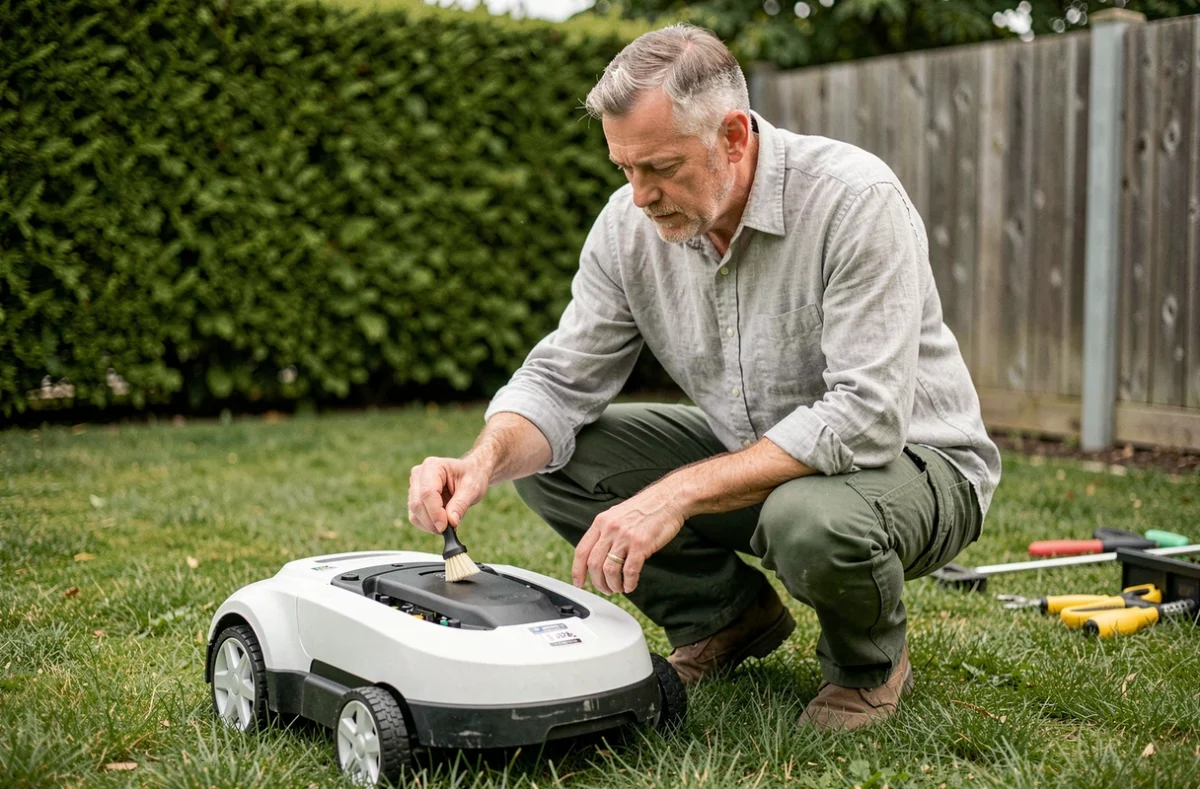
Connected robotic lawn mowers are becoming increasingly common in French gardens. Maintaining them now involves software, navigation sensors and battery management, as well as conventional mechanical cleaning. Neglecting any one of these areas can shorten the appliance’s lifespan, sometimes by several seasons.
Firmware updates: the invisible maintenance your robotic lawn mower needs
Beyond the blades, wheels and cleaning, a two-minute check can prevent costly malfunctions: checking the firmware.
In 2025, Husqvarna released updates for its Automower 405X and 415X models that fixed mapping issues, improved navigation through narrow passages and resolved a safety-function error identified in an earlier version. Ignoring these fixes means letting the robot run with a known bug.
Owners should check the manufacturer’s release notes before approving an update, not afterwards. An update that changes the mapping may require the mowing area to be mapped again. Installing it without reading the notes could leave the robot stuck against a low wall it had navigated around perfectly well the day before.
Knowing how to maintain a connected robotic lawn mower therefore means making software checks part of your routine, just like physical cleaning.
Blades and sensors: two checks you shouldn’t confuse
Everyone knows that blades wear out. What conventional maintenance guides tend to cover less is the relationship between blade condition and sensor performance.
Dull blades and motor strain
Worn blades don’t cut the grass; they tear it. The motor has to work harder to compensate, increasing battery consumption and generating more vibration. This unwanted vibration can interfere with some collision or tilt sensors on entry-level models.
Replacing the blades remains the most frequent mechanical maintenance task. For typical use, the annual cost is often between 30 and 80 euros, mainly for replacement blade sets.
Dirty sensors: a hidden problem
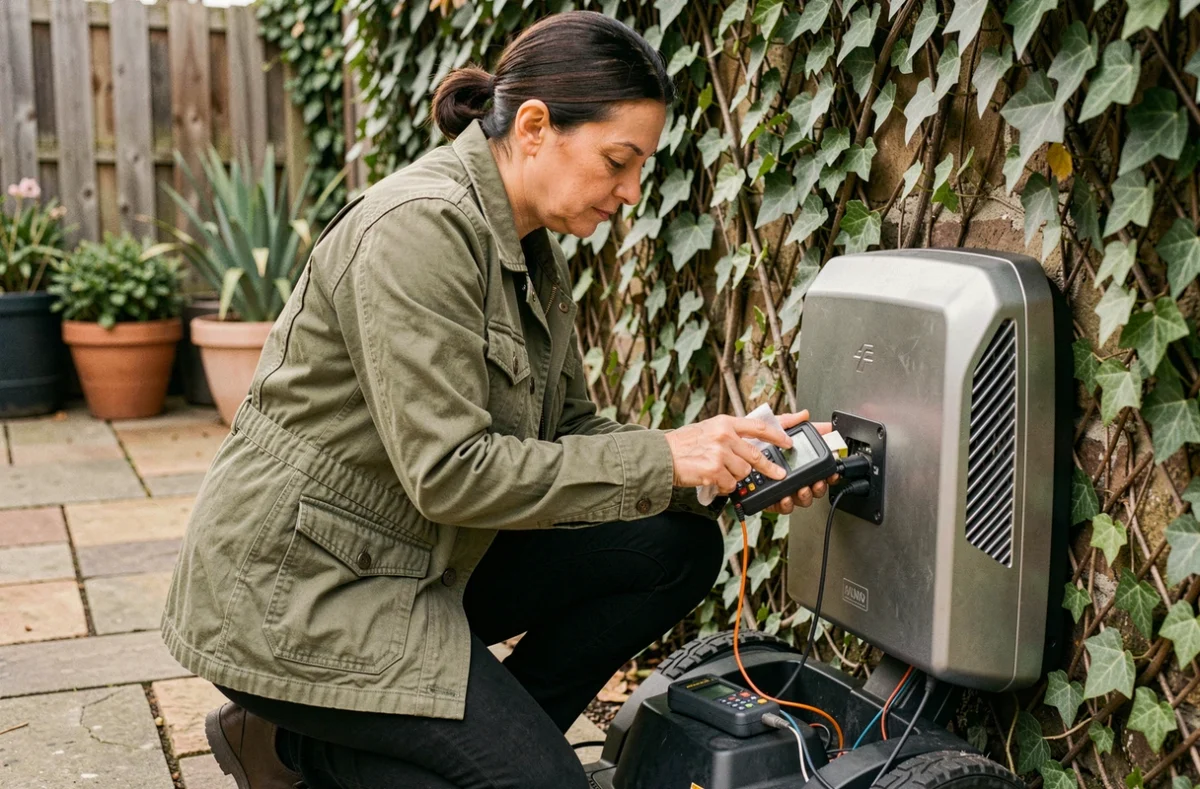
Proximity, rain and lift sensors accumulate damp grass and fine soil. A dirty rain sensor may keep the robot at its station in dry weather or, conversely, let it mow in a downpour. If a lift sensor is covered in mud, it may fail to trigger the safety stop if a child or animal lifts the appliance.
- Clean the sensors with a dry or slightly damp cloth. Never spray them directly with water, as this could let moisture seep past the seals.
- Check that the charging contacts on both the robot and the station are clean, as corroded contacts slow charging and put extra strain on the battery.
- Inspect the wheels and remove any grass wrapped around the axles, as it can gradually cause blockages and put abnormal strain on the drive motor.
Lithium-ion batteries: what the EU regulation will change
The battery remains the most expensive component of a robotic lawn mower. Replacing it can account for a significant share of the original purchase price. Today, on most models, this requires a trip to a repair shop or partial disassembly with little documentation available.
EU Regulation 2023/1542 sets a clear deadline. From 18 February 2027, products containing a portable battery will have to meet requirements for removal and replacement by the end user. For robotic lawn mowers covered by the regulation, this means manufacturers will have to design battery compartments that can be accessed without specialist tools, or supply the necessary tools with the product.
This deadline applies only to products placed on the market after that date. Models purchased before 2027 will not be covered retroactively. For these appliances, preserving the existing battery remains the most cost-effective strategy.
Practical steps to extend battery life
Storing the robot with a completely discharged battery over winter accelerates the degradation of its lithium-ion cells. Most manufacturers recommend leaving the battery at an intermediate charge level before winter storage, generally around half capacity.
Leaving the charging station in direct sunlight during summer raises the battery temperature with every charging cycle. Placing the station in the shade, on a level surface with enough clearance in front of the base, protects both the battery and the onboard electronics.
Winter storage for your robotic lawn mower: mistakes that can cost you in spring
Winter storage means more than simply putting the robot away in the garage. It’s when small oversights can build up and cause problems when you start it again.
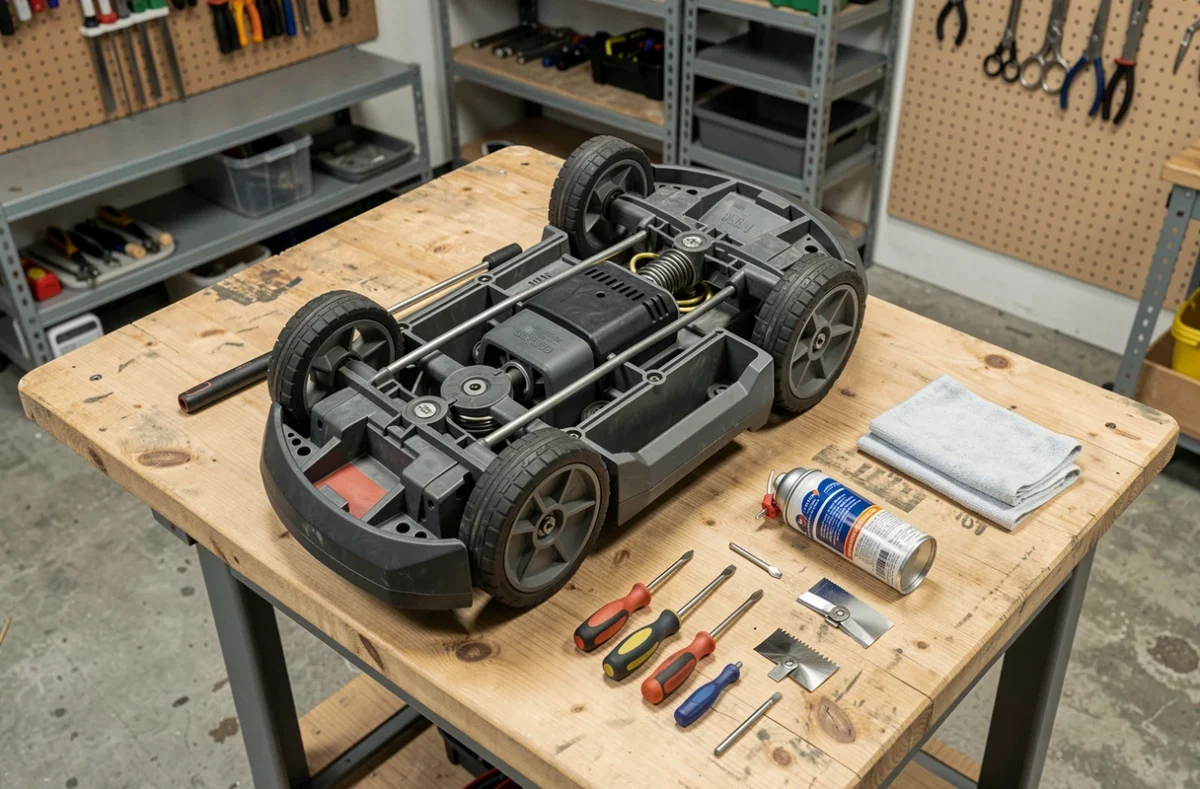
Leaving dried grass under the deck for several months encourages the cutting plate to corrode. A thorough clean before storage, using a soft brush and a slightly damp sponge, is enough to prevent this. Avoid using a pressure washer: it can force moisture into seals and connectors.
The charging station should also be cleaned and stored in a dry place. Its metal contacts can corrode if it is left outside all winter, exposed to frost and moisture. In spring, corroded contacts can cause erratic charging cycles, which owners often mistakenly blame on a battery nearing the end of its life.
Before the first start of the season, check the manufacturer’s app for available updates. Fixes released over the winter won’t install automatically if the robot has been switched off for months.
A well-maintained connected robotic lawn mower, both mechanically and in terms of software, can run for many seasons without any major replacements. The actual cost of maintenance is low compared with the cost of prematurely replacing a battery or electronic control board. The EU battery regulation coming into force in 2027 will make maintenance easier for future models, but for appliances already in use, every maintenance step counts.